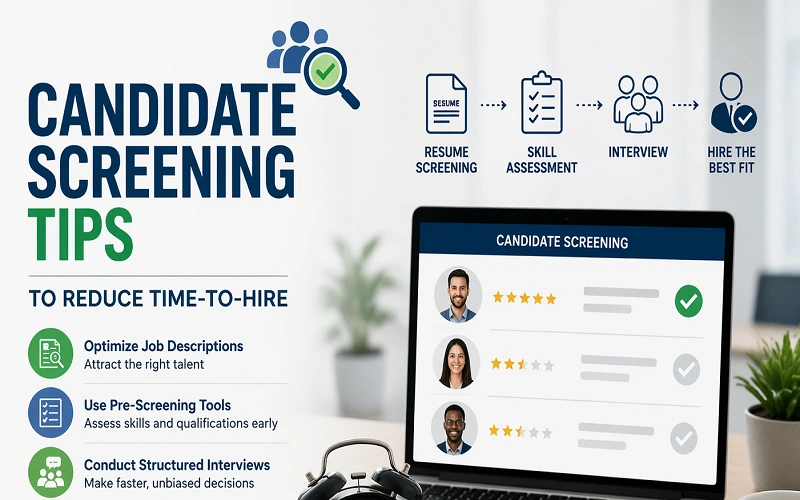
Hiring the right candidate is one of the most critical aspects of building a successful team. However, the process of selecting the ideal fit can often be time-consuming and resource-draining. One of the best ways to speed up the hiring process while ensuring you still find top talent is through efficient and effective candidate screening. By refining your screening process, you can reduce time-to-hire and make better hiring decisions. In this article, we’ll dive into the best practices for streamlining your candidate screening process.
The Importance of Candidate Screening in Reducing Time-to-Hire
In today’s competitive job market, businesses can’t afford to let recruitment delays hinder their progress. Prolonged hiring processes lead to missed opportunities and increased turnover, which directly impacts the company’s bottom line. A well-structured candidate screening process helps you identify the most qualified applicants faster, allowing your team to focus on engaging with top-tier candidates sooner.
Candidate screening is a systematic approach to evaluating applicants based on specific criteria, such as qualifications, skills, experience, and cultural fit. Implementing a strategic candidate screening system is not only key to reducing time-to-hire but also vital for building a high-performing workforce.
Optimize Your Job Descriptions to Attract the Right Talent
The first step to an efficient screening process begins long before you start reviewing resumes. Crafting clear, detailed, and precise job descriptions is essential in attracting the right candidates. A well-written job description acts as a filter that helps applicants self-select based on their skills and qualifications.
When creating your job descriptions, ensure you:
- Clearly define the role’s responsibilities.
- Highlight the essential qualifications and skills required.
- Mention desired but non-essential traits (soft skills or industry-specific knowledge).
- Set expectations about the hiring timeline and next steps.
By making your job descriptions comprehensive yet concise, you can minimize the number of unqualified applicants, which will ultimately reduce the time it takes to screen them.
Implement Pre-Screening Tools and Assessments
Pre-screening tools and assessments are an excellent way to streamline your candidate screening process. These tools help to quickly identify whether a candidate meets the basic qualifications for the role, saving you significant time in the initial stages of hiring. Common pre-screening tools include:
- Applicant Tracking Systems (ATS): ATS software automatically scans resumes for specific keywords, such as job titles or skills. By setting parameters in advance, you can ensure that only candidates who meet the job’s fundamental requirements make it to the next stage.
- Online Skill Tests: Platforms like Codility for developers or Vervoe for general assessments allow you to evaluate candidates’ skills before scheduling interviews. These tests provide a structured way to assess technical and soft skills.
- Pre-recorded Video Interviews: Services like HireVue or Spark Hire enable candidates to record their responses to pre-set interview questions. This approach helps you quickly assess whether candidates can communicate effectively and meet the job requirements without scheduling multiple rounds of interviews.
By integrating these tools into your hiring process, you can significantly reduce the time spent on unqualified candidates.
Utilize Structured Interviews to Speed Up Decision-Making
Once you’ve narrowed down your candidate pool through pre-screening, the next step is conducting interviews. Structured interviews are a powerful way to save time and improve decision-making. A structured interview follows a set list of questions designed to evaluate specific job-related competencies. This format not only ensures consistency but also allows you to quickly compare candidates’ responses.
In contrast to unstructured or conversational interviews, structured interviews offer several benefits:
- Faster decision-making: With predefined criteria, it’s easier to assess a candidate’s fit based on objective data rather than subjective impressions.
- Minimized bias: Structured interviews help reduce unconscious bias, making it easier to focus on the candidate’s qualifications rather than personal preferences.
- Improved candidate experience: When interviews are consistent, candidates know what to expect, leading to a smoother, more professional experience.
To further optimize your interview process, make sure your interview team is trained to conduct structured interviews effectively. This reduces delays caused by back-and-forth discussions or confusion regarding the candidate’s qualifications.
Leverage AI and Automation to Simplify Screening
Artificial intelligence (AI) is revolutionizing candidate screening by automating routine tasks. AI-driven recruitment software can perform many of the same functions as human recruiters, but at a much faster pace. By using AI tools to automate repetitive tasks, you can reduce the time it takes to screen candidates without sacrificing quality.
Here are some key ways AI can improve your candidate screening process:
- Automated resume screening: AI tools can scan and rank resumes based on how well they match the job description, reducing the time spent manually reviewing resumes.
- Chatbots for initial candidate interactions: Chatbots can be programmed to ask candidates basic pre-screening questions and answer frequently asked questions. This can save time during the initial stages by automating the qualification check.
- Predictive analytics: Some AI platforms can analyze a candidate’s past experiences and qualifications to predict their likelihood of success in the role. This allows recruiters to focus on candidates with the highest potential, speeding up the decision-making process.
With AI tools, you can process a large volume of applicants efficiently and avoid wasting time on those who don’t meet your hiring criteria.
Focus on Cultural Fit and Soft Skills Early On
While technical skills are essential, evaluating cultural fit and soft skills is just as important for long-term employee success. Candidates with a strong cultural fit are more likely to stay with the company and contribute positively to the work environment. However, assessing these factors can sometimes be time-consuming.
To speed up the process, integrate cultural fit and soft skills assessments into the early stages of candidate screening. Here’s how:
- Behavioral interviews: Ask candidates situational questions that reveal their problem-solving, teamwork, and conflict-resolution skills.
- Cultural fit assessments: Some companies use tools like culture-fit quizzes to assess whether candidates’ values align with the company’s culture.
- Soft skill testing: Use pre-screening assessments to measure important soft skills such as communication, time management, and leadership.
By focusing on these aspects early, you can reduce the risk of hiring candidates who may not align with your company’s culture, which can lead to turnover and a prolonged hiring cycle.
Keep Your Screening Process Transparent and Communicate Regularly
One of the biggest reasons for delays in the hiring process is poor communication. Candidates who are left in the dark about the status of their application may follow up repeatedly, which can further slow down the process. Additionally, a lack of transparency can lead to frustration for both recruiters and candidates, causing unnecessary delays.
To avoid this, keep your candidate screening process transparent by:
- Providing a clear timeline: Let candidates know what to expect and when they will hear back from you.
- Regular updates: Update candidates at every stage of the hiring process, even if it’s just to let them know their application is still under review.
- Clear expectations: Be upfront about the next steps, and ensure candidates know what they need to do to move forward.
Efficient communication reduces the time spent dealing with follow-up questions and ensures that all parties are on the same page.
Conclusion: Streamlining Candidate Screening for Faster Hiring
Reducing time-to-hire is a crucial factor in attracting top talent and staying competitive in today’s fast-paced job market. By optimizing your candidate screening process, you can identify qualified candidates more efficiently while maintaining the quality of your hiring decisions. Utilize tools such as pre-screening assessments, structured interviews, and AI automation to streamline the process and save valuable time.
Moreover, ensure that you’re focusing on cultural fit and soft skills early on to make long-term successful hires. With these strategies in place, you’ll not only reduce time-to-hire but also build a stronger, more capable workforce for the future.
By refining your candidate screening process, you’ll be well on your way to securing the best talent while maintaining a fast and efficient hiring process.