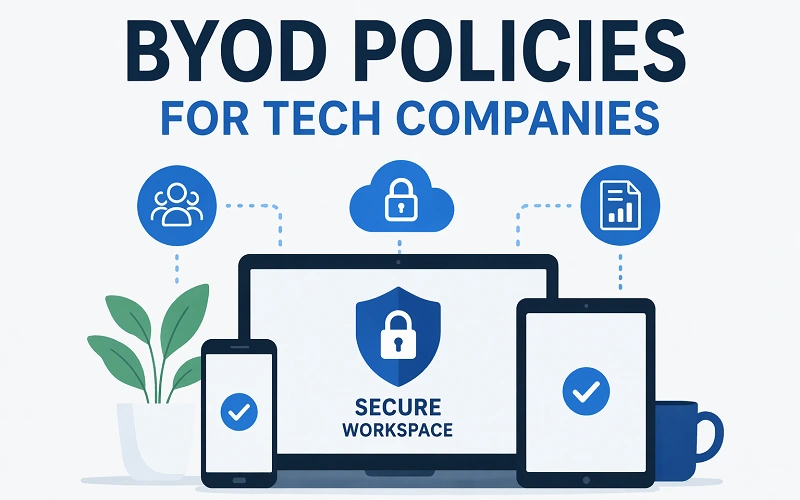
In today’s increasingly digital landscape, tech companies and startups face the challenge of providing secure, flexible working environments while maintaining a high level of productivity. Bring Your Own Device (BYOD) policies have emerged as a popular solution, allowing employees to use their personal devices for work purposes.
While this approach offers many benefits, it also introduces potential security risks. To ensure a balance between flexibility and security, businesses must establish comprehensive BYOD policies that prioritize a secure virtual workspace.
The Rise of BYOD in Tech Companies and Startups
The BYOD trend has been gaining traction in various industries, especially in tech companies and startups. The main reason for this shift is the desire for greater flexibility. Employees prefer using devices they are already familiar with, which can increase productivity and satisfaction. Startups, often operating with limited resources, benefit from the reduced cost of providing company-owned devices, while also fostering a culture of trust and autonomy.
However, BYOD also brings forth several challenges, particularly around security. With the increasing number of devices connected to company networks, protecting sensitive business data becomes more complicated. This is where the concept of a secure virtual workspace comes into play. A secure virtual workspace allows employees to work efficiently from their personal devices while ensuring that the company’s data remains protected.
Why Security Matters in a BYOD Environment
When employees access company systems from their personal devices, these devices may not be equipped with the necessary security measures, which increases the likelihood of data breaches. Personal devices may lack up-to-date security patches, encryption, or anti-virus software, making them vulnerable to cyberattacks.
A secure virtual workspace mitigates these risks by providing a controlled environment for accessing company resources. Rather than relying on the security of individual devices, companies can centralize data and applications in a secure cloud environment. This ensures that all sensitive information is protected, even if an employee’s personal device is lost, stolen, or compromised.
Key Elements of a BYOD Policy for Tech Companies and Startups
To successfully implement BYOD policies while maintaining a secure virtual workspace, tech companies and startups need to establish clear guidelines and protocols. Below are the key elements that should be included in a comprehensive BYOD policy.
1. Device Registration and Management
A crucial first step in managing BYOD is the registration and management of devices. Employees should be required to register their personal devices with the IT department before using them for work. This allows the company to track the devices, ensuring they meet specific security standards.
Additionally, companies can implement Mobile Device Management (MDM) software to monitor and control the security settings of these devices. This software can enforce password policies, ensure that devices are encrypted, and remotely wipe data in case of theft or loss.
2. Access Control and Authentication
In a BYOD environment, it is vital to establish strong access control mechanisms. Employees should only be granted access to the specific data and systems necessary for their roles. A tiered access control system allows businesses to restrict access to sensitive information, reducing the chances of a security breach.
Multi-factor authentication (MFA) is another critical security measure that companies should implement. By requiring multiple forms of verification—such as a password and a fingerprint scan—companies can significantly improve the security of their virtual workspaces. This ensures that even if a device is compromised, unauthorized users cannot easily gain access to company systems.
3. Data Encryption and Secure Virtual Workspace
Encryption is one of the most effective ways to secure data, both in transit and at rest. In a BYOD policy, it’s essential to ensure that all business-related data accessed or stored on personal devices is encrypted. This adds an extra layer of security, ensuring that even if a device is lost or stolen, the data remains unreadable without the appropriate decryption key.
A secure virtual workspace enhances this approach by allowing employees to access company data through a virtual desktop or cloud environment. By using a virtual workspace, the data itself is not stored on the employee’s device but in a secure cloud infrastructure. This eliminates the risk of data leakage in case the device is compromised.
4. Clear Guidelines for Acceptable Use
One of the most critical aspects of any BYOD policy is defining acceptable use. Employees should be informed about the risks associated with using personal devices for work and the company’s expectations. This includes outlining prohibited activities such as accessing malicious websites, downloading unapproved apps, or using unsecured Wi-Fi networks.
Additionally, the policy should specify guidelines for handling company data, including restrictions on sharing files, saving documents on personal devices, and using cloud storage services. By setting clear boundaries, companies can help ensure that employees are using their devices in ways that do not compromise security.
5. Employee Training and Awareness
It’s not enough to simply implement a BYOD policy; employees must also be educated on the importance of maintaining security. Regular training sessions should be held to ensure that employees understand the risks and best practices for keeping their personal devices secure.
Training should cover topics such as:
- How to set strong passwords and use password managers.
- The importance of updating software and installing security patches.
- How to recognize phishing attempts and other common cyber threats.
- Proper device disposal and data wiping techniques.
By fostering a culture of security awareness, companies can empower their employees to take an active role in safeguarding their devices and the company’s data.
6. Remote Wipe and Data Recovery
Despite best efforts, security breaches can still occur. Therefore, a key feature of a secure virtual workspace is the ability to remotely wipe company data from a lost or stolen device. With remote wipe capabilities, the IT department can quickly erase all sensitive information from an employee’s personal device, preventing unauthorized access.
In addition, companies should have a robust data recovery plan in place. In the event of a data breach, having a system for recovering lost or compromised data is essential to minimize downtime and business disruption.
Benefits of a Secure Virtual Workspace for BYOD
A secure virtual workspace offers several advantages that make it an ideal solution for tech companies and startups implementing BYOD policies. Below are some of the key benefits:
1. Improved Security
As mentioned earlier, a secure virtual workspace centralizes company data in a cloud environment, reducing the risks associated with storing sensitive information on personal devices. With robust encryption, access control, and remote wipe capabilities, businesses can significantly improve their security posture.
2. Increased Flexibility and Productivity
BYOD policies provide employees with greater flexibility, allowing them to work from any device they choose. This increases productivity by enabling employees to work more efficiently using tools they are familiar with. A secure virtual workspace supports this flexibility by providing a consistent, secure environment for accessing company systems, regardless of the device used.
3. Cost Savings
For tech companies and startups, implementing a BYOD policy can lead to significant cost savings. By allowing employees to use their personal devices, companies can reduce the need to purchase and maintain company-owned devices. This is especially beneficial for startups with limited budgets.
4. Scalability
A secure virtual workspace is highly scalable, making it an ideal solution for growing companies. As a business expands and hires more employees, the virtual workspace can easily accommodate new users without the need for additional hardware or infrastructure. This scalability makes it easier for startups to scale their operations without compromising security.
Conclusion
BYOD policies offer numerous benefits for tech companies and startups, including increased flexibility, cost savings, and improved productivity. However, to reap these benefits, businesses must prioritize security. By implementing a secure virtual workspace, companies can safeguard sensitive data while allowing employees to work from their personal devices. By establishing clear guidelines, utilizing encryption, and providing employee training, businesses can create a secure, productive, and flexible environment that supports the demands of modern workforces.
With the right policies and security measures in place, BYOD can be a win-win situation for both employees and employers, ensuring that both flexibility and security are maintained in the ever-evolving digital workspace.