
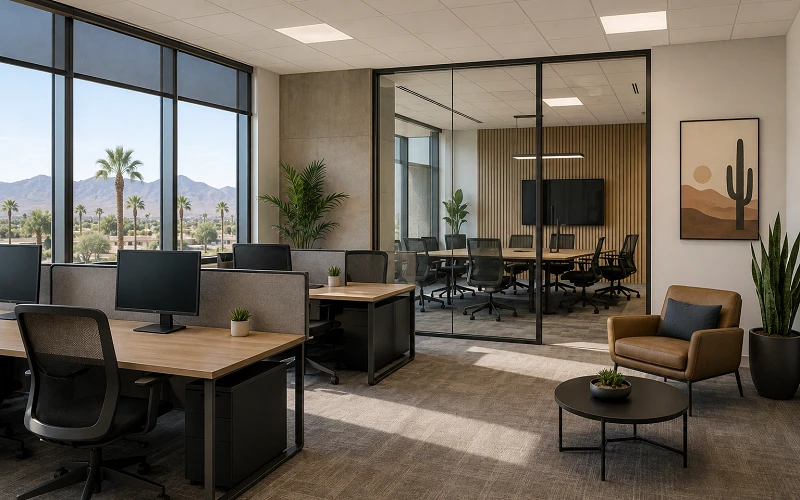
Arizona offices face a set of challenges that most design guides simply do not account for. The desert climate, regional building codes, and the state’s rapid commercial growth create conditions that demand a more deliberate approach to workspace planning and renovation.
Heat is the defining variable in Arizona office design. Summer temperatures in Phoenix and Tucson routinely push past 110 degrees, and that kind of sustained heat affects everything from material selection to how a building manages energy load throughout the day.
Standard design playbooks often lean into natural light as a default virtue. Large windows, open skylights, and glass-heavy facades work beautifully in temperate climates. In Arizona, those same choices can turn a workspace into an oven by mid-morning. West-facing glass becomes a liability during afternoon hours, when direct sun exposure drives up interior temperatures and forces HVAC systems to work harder than they were designed to.
This is why Arizona office remodels frequently treat window film, solar shades, or full window replacement as a first priority rather than an afterthought. Control solar heat gain first. Then address everything else.
Choosing Materials That Handle Thermal Stress
Arizona’s heat affects material durability in ways that matter for long-term remodeling decisions. Flooring, wall finishes, and furniture that perform well in moderate climates can warp, fade, or crack under prolonged exposure to extreme heat and intense UV radiation.
Luxury vinyl plank, polished concrete, and tile tend to hold up better than wood-based alternatives in high-heat environments. Paint finishes need to be rated for temperature fluctuation, especially in spaces where air conditioning cycles on and off aggressively. These are not minor details. They are the difference between a renovation that looks sharp for a decade and one that shows wear within two years.
Designing Around HVAC, Not Just With It
Most office layouts treat HVAC as infrastructure to work around. In Arizona, that relationship needs to flip. The placement of workstations, conference rooms, server closets, and break areas should be informed by the building’s cooling zones and airflow patterns.
Putting a server room on the south-facing wall of a building in Scottsdale without accounting for heat load is a mistake that creates ongoing operational costs. Positioning high-occupancy meeting rooms near weak cooling vents leads to discomfort and productivity loss during summer months. Thoughtful layout planning treats the HVAC system as a design partner from day one.
Building Codes and Permitting in Arizona Have Regional Nuances
Arizona does not operate on a single statewide building code the way some states do. Cities and counties adopt and amend codes independently, which means the permitting process for an office remodel in Mesa looks different from one in Chandler or Flagstaff. Contractors and designers who work primarily in other states often underestimate how much this variability affects project timelines.
Energy codes in particular have grown more stringent across major Arizona metro areas over recent years. Lighting efficiency standards, insulation requirements, and mechanical system specifications have all been updated to reflect the state’s energy demands. A remodel that skips a proper code review at the planning stage can face costly revisions during inspection. That is an expensive lesson.
Working with a design or construction team that has direct experience navigating Arizona’s municipal permitting landscape is not just a convenience. It is a practical necessity for keeping projects on schedule.
Dust and Air Quality Are Operational Concerns, Not Just Aesthetic Ones
Haboobs, the massive dust storms that roll through Arizona’s desert regions, are not just a dramatic weather event. They are a legitimate design consideration for office environments. Fine particulate matter infiltrates buildings through gaps in doors, windows, and HVAC intake systems. In office spaces with open server racks, sensitive equipment, or medical-grade requirements, dust infiltration is a serious operational risk.
Remodeling projects in Arizona benefit from incorporating better-than-standard air sealing, upgraded filtration systems, and positive pressure HVAC configurations that push air outward rather than pulling outside air in unchecked. Break room and entry vestibule design also plays a role. A well-designed entry buffer zone reduces the amount of dust and heat that enters the main office each time a door opens.
These considerations rarely appear in national office design guidelines because they are not relevant in most of the country. In Arizona, they belong in the initial scope conversation.
Workforce Expectations and Office Culture in the Southwest
Arizona has attracted a significant wave of corporate relocations and regional headquarters over the past decade. Companies moving operations from California, Illinois, or the Northeast often bring design sensibilities shaped by those markets. Open floor plans with exposed ceilings, industrial finishes, and minimal private space have dominated commercial design trends nationally.
That aesthetic does not always translate well here. Employees who commute in intense heat arrive at the office already managing physical stress. Spaces that feel cool, calm, and visually restful tend to perform better in terms of employee satisfaction and retention. Biophilic design elements, including indoor plants, water features, and natural textures, carry particular weight because they offer a psychological contrast to the harsh outdoor environment.
Outdoor amenity spaces also require rethinking. Rooftop terraces and uncovered patios that serve as year-round perks in San Francisco or Chicago become unusable for roughly five months in Phoenix. Shaded courtyards, misting systems, and covered outdoor areas with proper ventilation extend the usability of exterior spaces and add genuine value to the workplace experience.
Phasing Remodels Around the Arizona Calendar
Scheduling a major office renovation without accounting for summer heat is a logistical mistake. Construction crews working in exposed or partially exposed spaces during July and August face extreme conditions that slow productivity and create safety concerns. Material deliveries, adhesive curing times, and paint application are all affected by high ambient temperatures.
Experienced Arizona contractors like Cabinet Coatings build these realities into their project timelines. Phasing interior work for summer months and exterior or structural work for cooler periods between October and April produces better results and fewer delays. Companies planning a remodel should build the calendar around the climate, not around an idealized construction schedule.
There are also business continuity considerations. Remodels that disrupt cooling systems during summer create immediate problems for employees and equipment. Temporary cooling solutions add cost. Planning work in phases that protect occupied areas from heat exposure throughout the project keeps operations running and controls budget surprises.
Key scheduling principles for Arizona office remodels include:
- Prioritizing exterior work, roofing, and structural changes during cooler months
- Sequencing HVAC upgrades before cosmetic finishes to avoid rework
- Avoiding adhesive-heavy installations during peak summer heat
- Building buffer time into timelines for weather-related delays in monsoon season
- Coordinating furniture and equipment delivery around temperature-sensitive transit windows
Conclusion
Arizona’s commercial real estate market keeps growing, and the office spaces being built and renovated today will need to function well for years in a climate that does not forgive design shortcuts. The strategies that work in other parts of the country are a starting point at best. A design approach built specifically around heat management, regional code compliance, air quality, and the real rhythms of the Arizona calendar produces workplaces that are more durable, more comfortable, and more cost-effective over time. The state rewards designers and building owners who take its conditions seriously from the first planning conversation.