
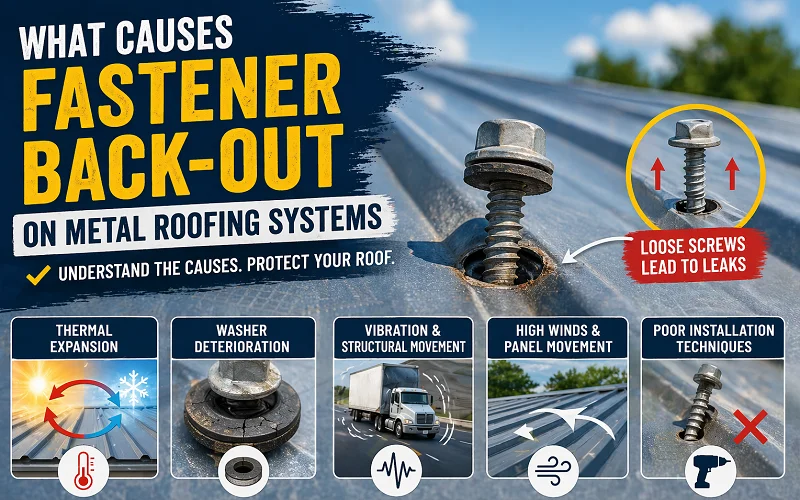
Think about the last time you took a long drive and noticed a metal roof that looked a bit “bumpy” or uneven. It probably wasn’t the metal panels themselves failing. More often than not, the culprit is a tiny screw that decided it didn’t want to stay put anymore. This phenomenon is known as fastener back-out, and it is one of the most common reasons homeowners end up calling for professional help.
If you are noticing gaps, a roof repair highland inspection team can help identify these loose screws before they turn into a major leak inside your living room.
The Push and Pull of Thermal Expansion
Metal is a material that reacts significantly to temperature. When the sun beats down on your roof during a hot July afternoon, those metal panels expand. When the sun goes down and the air chills, the metal contracts. This constant movement is not a flaw in the product but just a basic law of physics.
The problem starts because the wooden decking underneath the metal does not expand or contract at the same rate as the steel or aluminum panels. As the metal shifts back and forth, it puts a sideways force on the fastener. Over several years, this repetitive “tug-of-war” can wear out the hole in the wood or the metal. Once that hole becomes slightly oversized, the screw loses its grip and begins to work its way upward. It is a slow process, but once a screw starts to move, it rarely stops on its own.
The Role of Gaskets and Washers
Most roofing screws come equipped with an EPDM rubber washer. This little piece of rubber is the only thing standing between a dry house and a soggy attic. Its job is to compress against the metal panel and create a watertight seal. However, these washers are not invincible.
Over time, UV rays from the sun cause the rubber to become brittle. If the screw was over-driven during the initial installation, the washer might have been crushed or displaced from the start. On the flip side, if the screw was under-driven, the washer never formed a seal at all. When the washer fails, or the screw backs out even a fraction of an inch, the seal is broken. Water can then seep down the threads of the screw and directly into your roof decking, leading to rot that makes the back-out problem even worse because the wood can no longer hold the fastener.
Vibration and Structural Movement
While temperature is the biggest factor, it is not the only one. Homes are dynamic structures that are constantly settling. If you live near a busy highway, a train track, or in an area with high winds, your roof is subjected to subtle vibrations. These micro-vibrations act like a tiny wrench, slowly unscrewing the fasteners over a period of many years.
High winds are particularly troublesome for metal roofs. As wind blows over the ridges of the roof, it creates a pressure differential that can cause the panels to flutter. You might not hear it from inside, but that fluttering puts an incredible amount of stress on the fasteners. If the original installer used screws that were too short or didn’t hit the solid meat of the rafters, those screws are much more likely to pull loose under the pressure of a storm.
Poor Installation Techniques
Sometimes the issue has nothing to do with the environment and everything to do with how the roof was put together. One of the most common mistakes is “over-torquing” the fasteners. If a contractor uses an impact driver and zips the screws in too tightly, they can actually strip the threads in the wooden lath or decking. A stripped screw feels tight at first, but it has no real staying power.
Another issue is the angle of the screw. Fasteners should be driven perfectly perpendicular to the roof surface. If a screw goes in at a slight angle, the washer cannot sit flat against the metal. This creates a gap on one side where water can enter and allows the panel to move more freely, which accelerates the back-out process. Using the wrong type of fastener, such as using screws designed for wood in a metal-to-metal application, will also lead to premature failure and a very frustrated homeowner.
Final Word
Ignoring a few loose screws might seem harmless, but it is often the first sign of a roof that is starting to struggle. If you see shadows under your screw heads or notice panels that rattle when the wind picks up, it is time to act. Getting a roof repair highland inspection is the best way to ensure your fasteners are tightened, replaced, or resealed before the next big rain. Taking care of these small components now will save you from the massive headache of a full roof replacement down the road.