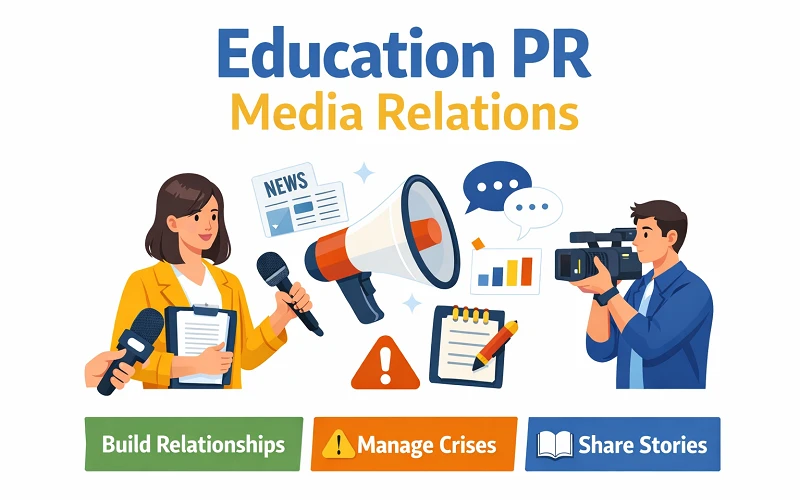
In today’s fast-moving media environment, education institutions face increasing pressure to communicate clearly and credibly with the public. Universities, colleges, and educational organizations are constantly competing for attention in a crowded digital landscape where news cycles move quickly and public expectations continue to evolve. For communication professionals working in the education sector, strong media relations strategies are essential to building trust and maintaining a positive institutional reputation.
Education leaders must address complex issues such as policy changes, student outcomes, research innovation, and community engagement while ensuring their messaging remains accurate and accessible. Effective media engagement allows institutions to share meaningful stories, highlight achievements, and respond to challenges in a timely manner. This is why many communication teams rely on specialized expertise in education PR to develop strategic media outreach and strengthen relationships with journalists and stakeholders.
Building Strong Relationships with Journalists
One of the most important tactics for education PR professionals is developing authentic relationships with journalists who cover education, policy, and community issues. Media relationships should be built over time through consistent, transparent communication rather than only during major announcements or crises.
Understanding a journalist’s interests, coverage style, and audience helps PR professionals tailor their outreach effectively. When communications teams provide relevant information, expert sources, and timely insights, reporters are more likely to rely on them as trusted contacts.
Consistency also matters. Sending concise, well-structured press materials, responding quickly to inquiries, and respecting deadlines strengthens credibility with media professionals. Education institutions often have unique stories—from groundbreaking research to innovative teaching models—that can resonate with audiences when presented in a clear and compelling way.
By focusing on relationship-building rather than one-off pitches, PR professionals create long-term partnerships with journalists who value reliable sources and insightful commentary.
Crafting Newsworthy Education Stories
Not every institutional update will capture media attention. Successful education PR professionals know how to identify and frame stories that offer broader relevance beyond the campus community.
Journalists typically look for narratives that highlight innovation, impact, or human interest. Research breakthroughs, student success stories, community partnerships, and initiatives addressing societal challenges can all generate media interest when presented with strong context.
Effective storytelling requires translating complex academic information into language that general audiences can understand. This means emphasizing the real-world implications of research or educational programs rather than focusing solely on internal achievements.
Data can also strengthen media pitches. Statistics about student outcomes, economic impact, or research funding provide credibility and demonstrate significance. However, numbers alone are rarely enough. Pairing data with personal stories—such as a student benefiting from a new program or a professor leading groundbreaking research—creates narratives that journalists and readers find compelling.
Managing Media During Sensitive Issues
Education institutions sometimes face challenging situations, including policy debates, campus controversies, or public safety concerns. During these moments, media relations professionals play a critical role in ensuring accurate information reaches the public quickly.
Preparation is key. Institutions should establish crisis communication protocols and designate trained spokespersons before issues arise. Clear internal coordination allows communication teams to respond quickly while maintaining message consistency.
Transparency is equally important. Attempting to withhold information or delay responses can damage credibility and increase media scrutiny. Instead, institutions should acknowledge concerns, provide verified facts, and communicate what steps are being taken to address the situation.
Regular updates help maintain trust with journalists and the public. Even when all answers are not yet available, sharing progress and reaffirming institutional commitments demonstrates accountability and professionalism.
Leveraging Thought Leadership Opportunities
Beyond traditional press releases and media pitches, education PR professionals can expand visibility through thought leadership initiatives. Universities and educational organizations often employ experts whose insights can contribute meaningfully to public discussions.
Opinion articles, expert commentary, research summaries, and participation in industry panels can position institutional leaders as trusted voices in the education sector. When faculty members or administrators share informed perspectives on policy developments, technological change, or workforce trends, they contribute to broader conversations while strengthening institutional credibility.
Media outlets frequently seek expert sources who can explain complex issues clearly. By proactively connecting journalists with knowledgeable faculty or researchers, PR professionals increase the likelihood of their institution being featured in news coverage.
Thought leadership also supports long-term reputation building, demonstrating that an institution contributes valuable knowledge and expertise to society.
Conclusion
Media relations remains one of the most influential tools for education PR professionals seeking to strengthen institutional visibility and credibility. By building strong relationships with journalists, crafting compelling stories, preparing for sensitive situations, and promoting expert insights, communication teams can create meaningful engagement with the public.
Successful strategies require consistency, transparency, and a clear understanding of the evolving media landscape. As audiences continue to demand accurate information and authentic storytelling, education institutions must approach communication with both strategic planning and adaptability.
In the long term, effective media relations not only supports institutional reputation but also amplifies the broader impact of education—highlighting research, innovation, and community contributions that shape the future of society.