
Denied Claims Trace Back to the First Patient Interaction
Most revenue leakage in a medical practice begins before a provider ever sees the patient. Front desk staff collect insurance information, confirm coverage, and estimate patient responsibility, yet these steps are frequently rushed or skipped entirely during busy intake periods. A single missed authorization or outdated policy number can turn an otherwise routine visit into a claim that bounces back weeks later. By the time billing staff catch the error, the patient has already left, the service has been rendered, and the practice is left chasing payment that may never arrive.
The scale of this problem is larger than most administrators assume. Industry estimates suggest that a meaningful share of claim denials stem from registration and eligibility errors rather than coding mistakes or medical necessity disputes. That distinction matters less than the pattern it reveals: practices are losing money on preventable administrative gaps, not complex clinical judgment calls. Staff turnover compounds the issue, since new hires rarely receive the same depth of training on payer rules that experienced employees developed over years on the job.
Verifying Coverage Before Service Changes the Financial Outcome
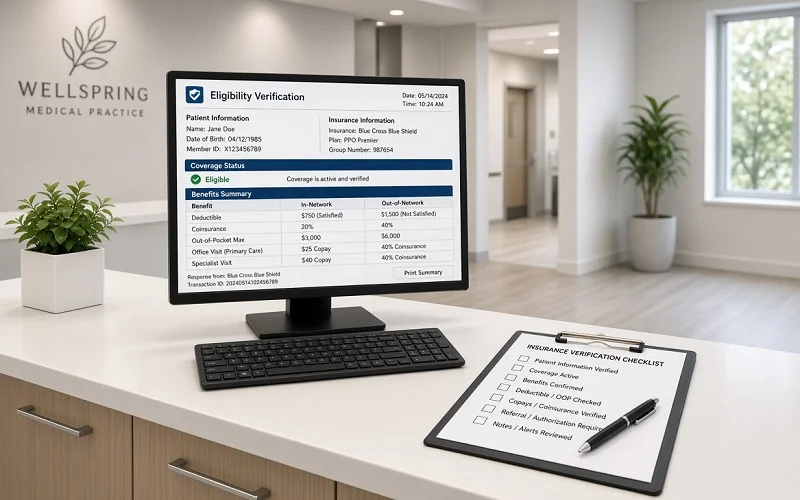
Practices that build verification into their scheduling workflow see fewer denials and faster reimbursement cycles. This means confirming active coverage, checking plan-specific benefits, and identifying prior authorization requirements days before the appointment rather than minutes before it. Staff who verify early also have time to contact patients about unexpected out-of-pocket costs, which reduces billing disputes after the fact. The process requires discipline and consistent follow-through, but it shifts the practice from reactive billing to proactive financial management.
Technology has made this process more manageable, though it still depends on staff who understand how to interpret what the system returns. Eligibility checks can flag inactive policies or coverage gaps automatically, yet someone still has to review flagged accounts and decide how to proceed before the visit. Practices that treat this step as a formality rather than a safeguard tend to see the same errors recur month after month. Training staff to read beyond a simple active or inactive status, including deductible balances and referral requirements, closes gaps that automated checks alone cannot catch.
Building a Verification Standard Your Billing Team Can Rely On
Practices that treat verification as a formal process rather than an occasional task tend to recover revenue faster and spend less time on appeals. Part of understanding financial clearance involves recognizing that insurance confirmation is not a one-time checkbox but an ongoing responsibility that touches scheduling, registration, and billing departments alike. When these teams share consistent standards for what counts as verified coverage, fewer claims fall through administrative cracks. The goal is not perfection on every single claim but a measurable reduction in the preventable errors that drain staff time and delay payment.
Administrators evaluating their current process should look at how often claims are denied for eligibility reasons versus clinical ones, since that ratio tells a clear story about where the real problem sits. Resources such as AMA medical billing resources offer practical guidance on claims workflows that practices can compare against their own procedures to spot gaps.
It also helps to examine how long verification takes per patient and whether that time scales reasonably as patient volume grows. Practices that invest in staff training now, rather than after a wave of denials forces the issue, tend to spend far less time on corrective appeals later.
Smaller practices sometimes assume that formal verification processes are only necessary for larger, more complex organizations, but the opposite tends to be true. A solo practitioner or small group has less margin to absorb delayed reimbursement, which makes early coverage confirmation even more consequential for day-to-day cash flow.
Setting a clear standard, documenting it, and reviewing it periodically gives staff a reference point when questions arise about a specific payer or plan type. Over time, that consistency becomes the difference between a billing department that reacts to denials and one that prevents most of them before they happen.