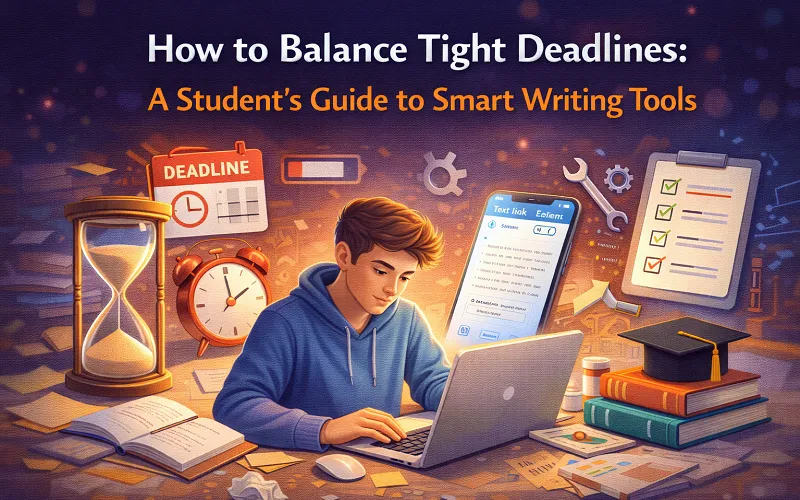
The modern academic landscape is more demanding than ever. Between lecture marathons, part-time jobs, and the social expectations of university life, students often find themselves staring down a “deadline mountain.” When three 2,000-word essays are due in the same week, the pressure doesn’t just affect your grades—it affects your mental well-being.
The secret to surviving this isn’t just “working harder.” It’s about working smarter by integrating the right methodologies with modern digital tools. In this guide, we’ll explore how to navigate a high-pressure semester without burning out.
1. The Psychology of the Deadline: Why We Procrastinate
Before picking up a tool, it is essential to understand why we get stuck. Most students don’t struggle with the writing itself; they struggle with the start. This is known as “Blank Page Syndrome.” When a task feels too large, our brain’s amygdala triggers a freeze response.
To bypass this, you need to break the “Goliath” project into “David-sized” tasks. Instead of writing “Finish History Paper” on your to-do list, write “Draft 3 bullet points for the introduction.” Small wins release dopamine, which fuels the momentum needed for the next step.
2. Mastering the Pomodoro Technique and Time Blocking
Technology can be a distraction, but it can also be your greatest ally in focus. One of the most effective ways to manage a tight schedule is Time Blocking. Unlike a simple to-do list, time blocking requires you to assign specific hours of your day to specific tasks.
Combine this with the Pomodoro Technique:
- Work for 25 minutes on a single task.
- Take a 5-minute break (step away from the screen).
- Repeat 4 times, then take a longer 30-minute break.
Apps like Forest or Be Focused can gamify this process, helping you keep your phone at bay while you grind through a difficult chapter.
3. Streamlining the Drafting Phase
Once you have your schedule, the next hurdle is the actual drafting. When the clock is ticking, you don’t have the luxury of waiting for “inspiration” to strike. You need a structure immediately.
This is where specialized drafting tools become invaluable. For many, using an essay typer is a game-changer for the brainstorming phase. These tools aren’t meant to do the work for you, but rather to act as a collaborative partner. By inputting your topic, you can generate a rough outline, see how different arguments might flow, and get a sense of the required vocabulary.
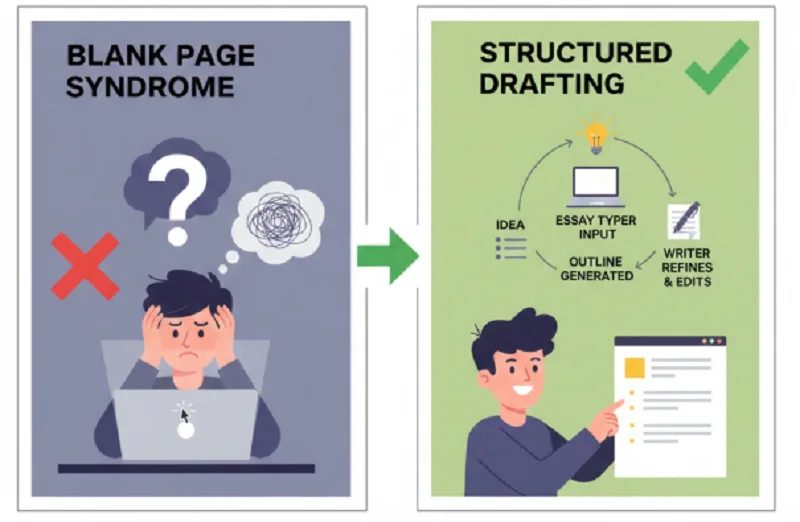
When you use a resource from a reputable provider like MyAssignmentHelp, the goal is to bridge the gap between a blank screen and a working first draft. It allows you to see a “skeleton” of your essay, which you can then flesh out with your own original research, critical analysis, and unique voice. It’s about reducing the friction of the initial start so you can spend more time on high-level thinking.
4. Beyond the Draft: Research and Organization
A common mistake students make during a time crunch is “messy research.” You find a great quote, forget to save the URL, and spend three hours looking for it later. To prevent this, use organizational tools like Notion or Zotero.
- Zotero: Automatically senses research as you browse the web and builds your bibliography in seconds.
- Notion: Use it as a “Digital Second Brain” to store lecture notes, PDF highlights, and your essay outlines in one interconnected space.
By centralizing your data, you eliminate the “panic search” that happens 24 hours before a deadline.
5. When Technology Isn’t Enough: Seeking Expert Guidance
Sometimes, the deadline is simply too tight, or the subject matter is too complex for a software solution. Perhaps you’re struggling with a technical engineering report or a complex legal case study where the nuances are beyond the reach of basic AI or templates.
In these instances, professional academic support becomes a strategic choice. Many top-performing students utilize assignment writing services not as a “way out,” but as a “way through.” Reviewing a professionally drafted model paper on your specific topic can provide clarity on complex formatting (like OSCOLA or Bluebook) and show you how to structure a high-level academic argument. It serves as a personalized study guide tailored exactly to your curriculum.
6. The “Three-Step Polish” for a First-Page Finish
If you want your work to stand out—and if you’re writing this for a blog and want it to rank—you must prioritize the final polish. Even the best content will fail if it’s hard to read.
- Read Aloud: Your ears will catch awkward phrasing that your eyes miss.
- The “Hemiway” Test: Use the Hemingway App to ensure your sentences aren’t too “wordy.” Academic writing should be complex in thought, but simple in delivery.
- Check Your Links: If you are publishing a guest post, ensure your external links are relevant and add value to the reader.
7. Ethical Considerations in the Digital Age
As we integrate more tools into our workflow, the question of academic integrity naturally arises. The most successful students use technology as a scaffold, not a substitute.
Whether you are using a grammar checker, an outline generator, or a professional consultancy service, the final submission must reflect your understanding. Use these tools to learn how a good essay is built. Analyze the structure provided by the tools, question the sources, and always add your own perspective. This approach doesn’t just get the assignment done; it builds the skills you’ll need for your future career.
Conclusion:
Balancing tight deadlines is a skill that will serve you long after you leave the university. By combining the “human” elements of discipline and critical thinking with “smart” tools like organized planners and drafting assistants, you transform from a stressed student into a productive scholar.